My walls are not connecting how I'd like them to or I'm seeing the main layer of the wall through my exterior layer. How can I fix this?
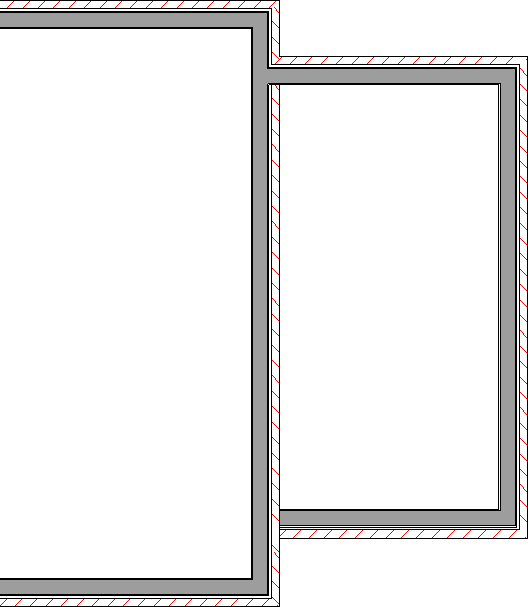
Specifying an incorrect wall main layer, or wall setting for a wall type can be problematic when connecting different wall types to one another.
If there is just one wall connection that is unique to your plan, you can use the Edit Wall Intersection edit tool to change how that wall connects to other walls at that particular intersection. If you see that multiple intersections are wrong, you may need to adjust your Wall Defaults and/or Wall Type Definition; if this is the case, skip to the third section in this article before trying the first two.
If you only need to adjust specific wall layer connections and do not want to change the main layer of all walls of that type, use the Edit Wall Layer Intersection edit tool to manually snap the individual layer or layers of one wall to the layer of an intersecting wall.
 , click on the wall that you'd like to adjust.
 edit tool and notice the additional edit handles that display on the wall. edit tool instead. edit tool on a pony wall, an Edit Layer Intersections for Lower Wall Part
  edit tool will appear. Clicking this will allow you to edit the layer intersections of the lower wall.
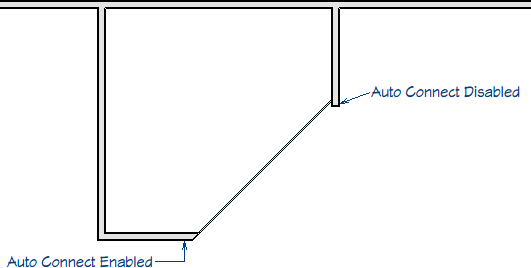
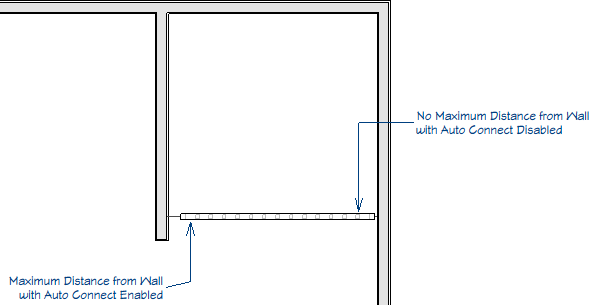
 In Chief Architect X18 and newer versions, you can click on the magnet icon to enable/disable the automatic wall connection functionality. With Auto Connect disabled you can position ends of walls very closely to each other, where otherwise the Auto Connect would connect them. This can be very helpful for custom shower designs and details at the ends of your walls. Please see the next section for more information.
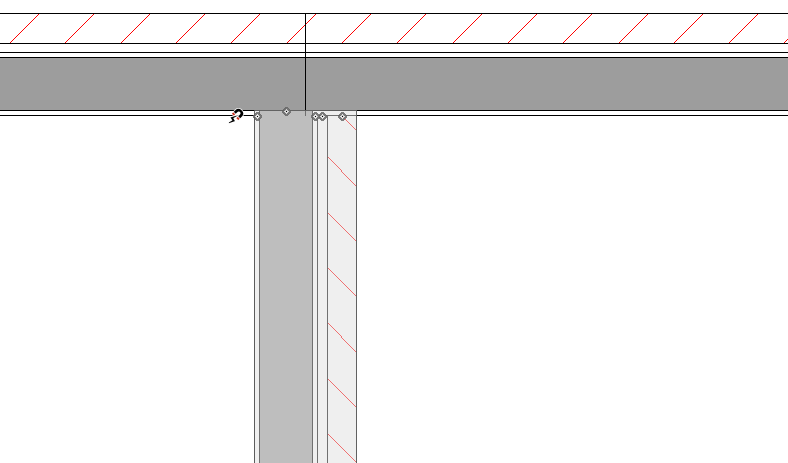 tool still active, click and drag the edit handles to snap the layers of one wall to the desired layers of the other.
Note: If you're pulling one wall through the layers of another wall, as in the image below, a break in the wall is needed at that location. Click on the wall to select it, click on the Add Break edit button, then place a break at the intersection.
In Chief Architect X18 and newer versions, you can use the "Reset Wall Layer Intersections" edit tool to revert any changes made with the Edit Wall Intersections edit tool.
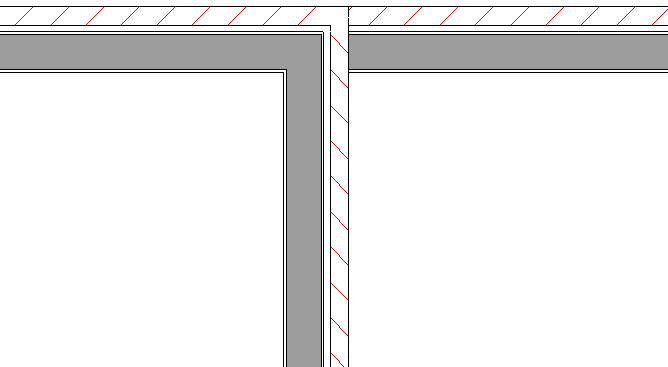
*Applies to Chief Architect X18 and newer versions.
In addition to changing how the wall layers intersect, you can also disable the automatic wall connection function to manually position your walls. This allows you to manually create certain wall conditions that would be more difficult with the automatic functionality.
tool select wall that you'd like to adjust. edit tool and notice the additional edit handles that display on the wall.  icon to prevent the ends of your walls from automatically connecting. the wall again to adjust the overall length and connection of the wall.
 to close the gap and create room definition.
Walls with Auto Connect disabled the wall will display an Enable Auto Connect icon when they are selected.
Clicking the Enable Auto Connect icon will revert any of the manual changes you made to the wall connection.
Below are a few use cases for having Auto Connect disabled:
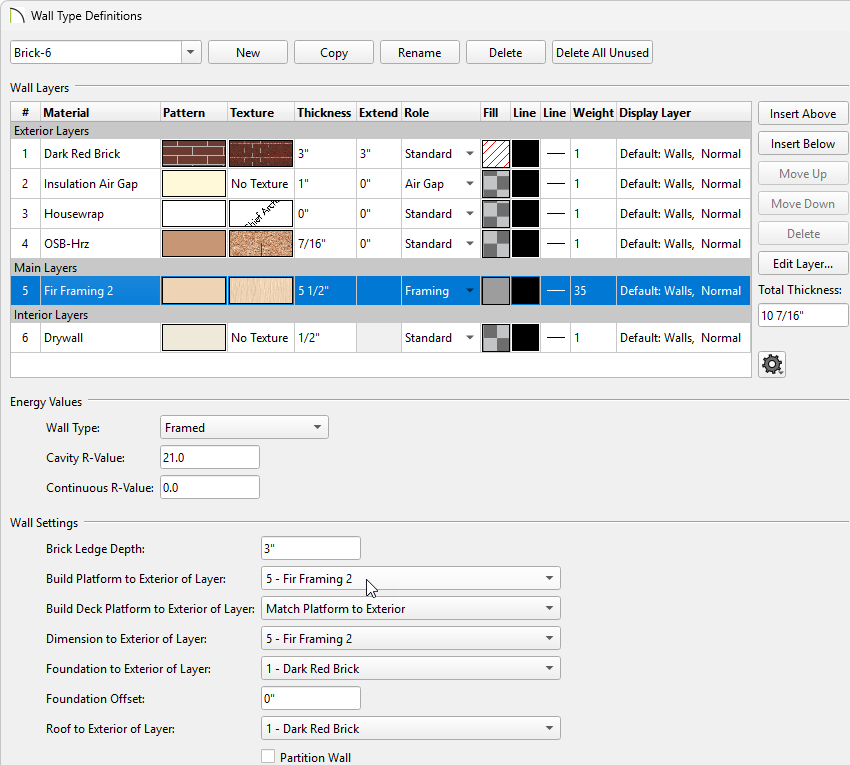
If you have recently modified your wall types, you may have changed the main layer(s). In most circumstances, the main layer(s) should be specified as the structural layer(s) of the wall, particularly when the wall is a framed type. The main layer(s) determines many things, including how walls join at intersections to the interior surfaces of their main layers. If you do not want your walls to move when you adjust the main layer(s) of your wall types, you first need to adjust your General Wall Defaults.
 , expand the Walls category, highlight General Wall, then click Edit.
These options determine what part of a wall retains its position when its wall type or wall type definition is changed. The Resize About location is also where any snap points will be located along a wall as it's drawn or connected to other walls, as well as where a wall's length is measured.

After completing Step 7 and resolving your wall connections, be sure to go back to the General Wall Defaults and switch the Resize About option back to Main Layer Outside.
 edit tool.
In most cases, the main layer should be the structural layer, often the thickest layer within your wall.

After completing Step 7 and resolving your wall connections, be sure to go back to the General Wall Defaults, as discussed in Steps 1 and 2, and switch the Resize About option back to Main Layer Outside.
